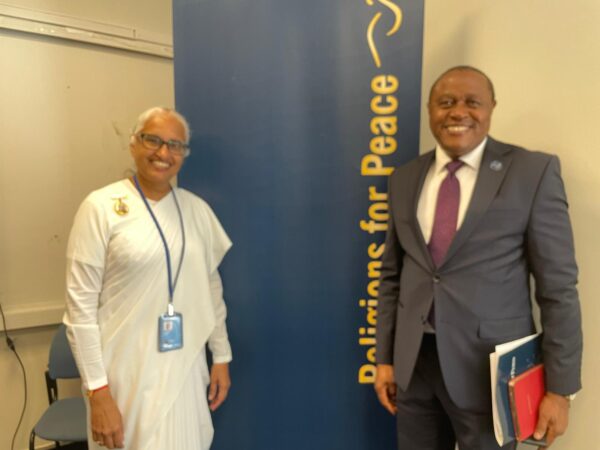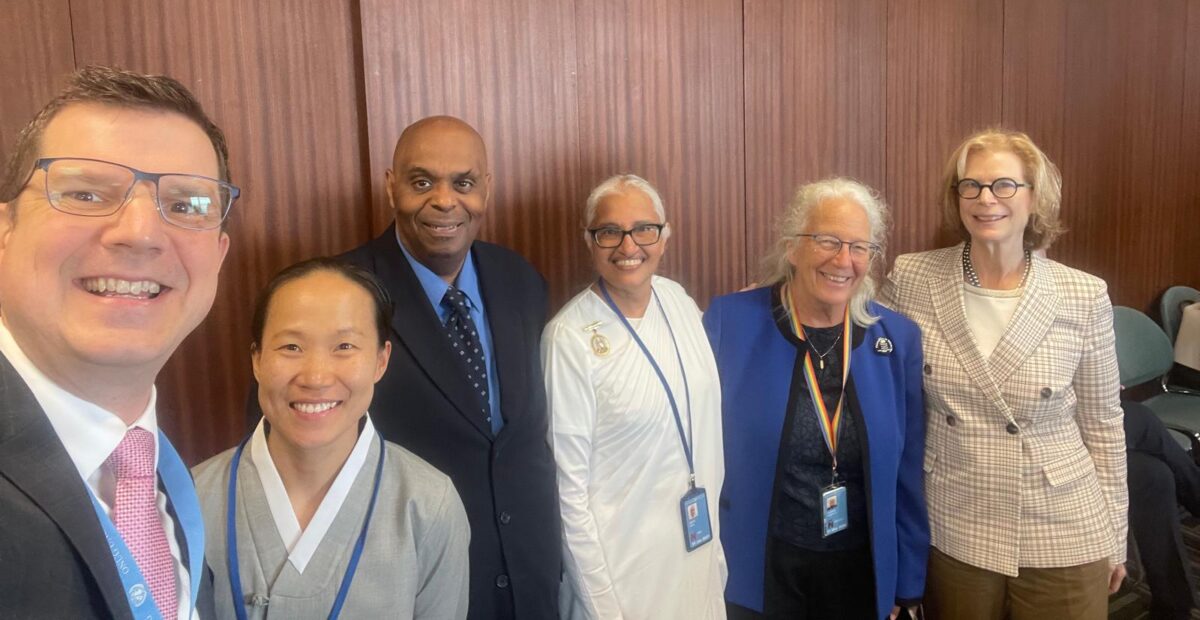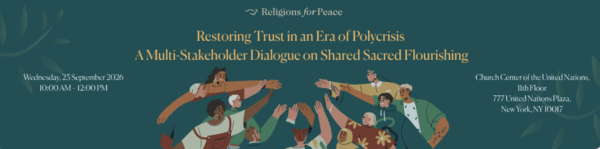
Convened by Religions for Peace, against the backdrop of the UN High-Level General Debate, this timely gathering brought together diverse stakeholders, including UN actors, religious leaders, faith-based organisations, and development practitioners to explore how Shared Sacred Flourishing can strengthen the relationships, trust, and shared moral responsibility needed to respond collectively to today’s interconnected global challenges.
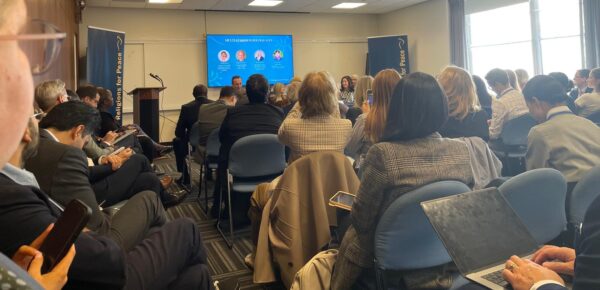
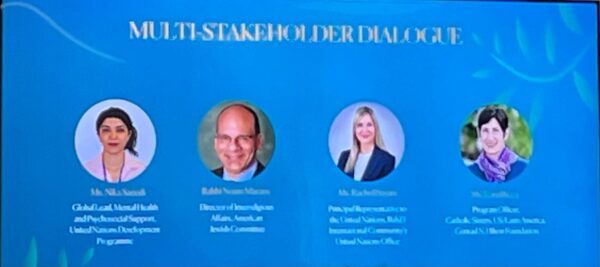
Here are some highlights from the various presenters:
- What can faiths do to build trust?
- protect religious liberty
- foster friendly relationships among religions
- make educational spaces more faith-friendly
- jointly care for those who need it, when in need
- see through lens that this is possible.
- Human dignity is sacred. We need to do repeated acts of sacredness.
- Narrative has to change such as: less “them” and more “us”
- Showing up for each other’s religions at times of challenge helps change the narrative and builds trust and solidarity.
- We need to believe in the inherent dignity of the human spirit; this transcends all barriers of religion and creed.
- The thread that ties us together is the care we offer one another.
Questions we need to ask ourselves:
- How do we use our faith values to build trust?
- How down change the global narrative on tenderness?
- How do we show “tenderness” in the human spirit and express more love and trust?
- Are we prepared to sacrifice what is comfortable to us in order to bring the necessary change?